Orange Travel eSIM Plans for Short vs Long Stays in 2026
10/6/2026
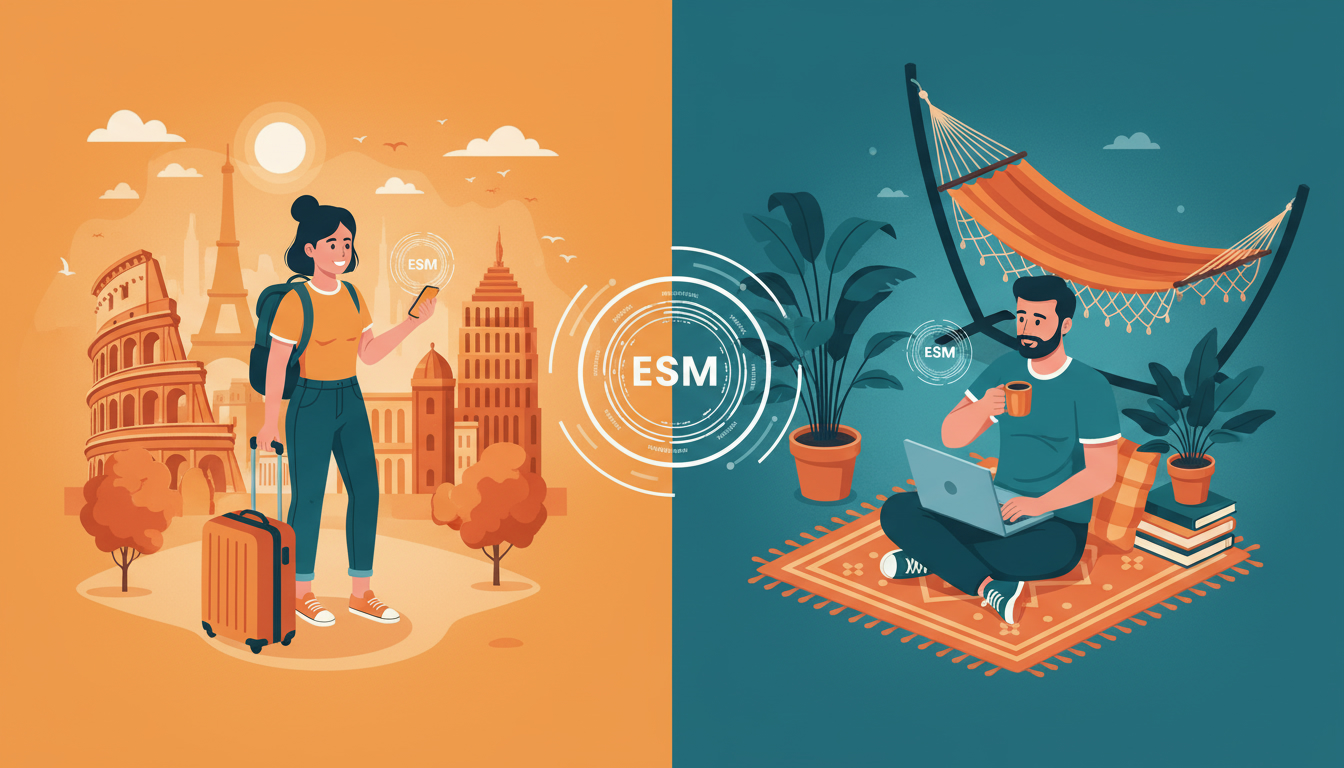
Choosing Between Orange Travel eSIM Plans for Short-Term and Long-Term Stays
If you’re planning a trip abroad and considering an Orange travel eSIM, the key question is how your trip duration affects which plan suits you best. Orange Travel offers prepaid eSIM data packages designed for international use, with varying options tailored to short-term visitors and longer stays.
Understanding the differences in pricing, data allowances, and activation ease can save you from overspending or running out of data mid-trip.
Orange Travel eSIM Data Packages: What Changes With Trip Length?
Orange Travel’s eSIM plans typically come in short-term bundles lasting 7 days with data volumes like 3 GB, priced competitively compared to other providers. For example, a 7-day 3 GB plan costs about 1.99 USD according to MyBestSim’s verified offers.
Longer-term plans usually extend up to 30 days with similar or slightly increased data caps but at a higher total cost.
The main trade-off is between upfront cost efficiency and data sufficiency over time:
- Short-term stays (up to 7 days): Opt for smaller, prepaid packages like the 3 GB for 7 days. This avoids paying for unused days or excess data.
- Long-term stays (2 weeks to a month): Larger packages or multiple renewals may be necessary. However, topping up an Orange travel eSIM can sometimes be less straightforward than buying a fresh plan.
The mechanism behind this is that prepaid plans are locked to their validity period from activation. If you activate a 7-day plan but stay longer, your connection will cut off unless you top up or buy a new package.
Conversely, activating a longer plan upfront might mean paying for days you don’t use if your trip ends early.
| Plan Duration | Data Volume | Price (USD) | Best For |
|---|---|---|---|
| 7 Days | 3 GB | $1.99 | Short trips, light users |
| 30 Days | 3 GB | ~$3.99* | Longer trips, moderate use |
*Price varies by provider; check MyBestSim for current deals.
How Activation and Compatibility Affect Your Choice
I always start by checking device compatibility because not all phones support every eSIM format or carrier profile equally. Orange travel eSIM is compatible with most modern smartphones that support GSMA-compliant remote SIM provisioning (SGP.22 standard).
This means you can install the eSIM profile directly via QR code without swapping physical SIM cards.
Activation is straightforward through the Orange Travel app or website, where you select your destination and purchase the plan. The app interface has been praised for clarity and ease of use after recent updates, making it accessible even if you’re not tech-savvy.
However, a common mistake travelers make is activating their eSIM too early before arriving in the destination country. Since the validity countdown starts at activation, activating too soon can waste precious days of connectivity.
The concrete consequence: your prepaid days run out before your trip ends, forcing an unexpected top-up or new purchase.
Coverage Areas and Network Quality for Different Trip Lengths
Orange Travel eSIM coverage spans multiple countries worldwide, including popular destinations like the United States, South Korea, Hong Kong, and Central America. The service partners with local operators to provide stable data connections and hotspot capabilities.
For short trips, coverage reliability in major cities and airports is usually excellent because Orange leverages well-established networks like SK Telecom in South Korea or AT&T in the US. For longer stays extending into rural or less connected regions, network quality can vary significantly depending on local infrastructure.
A field observation from my knowledge: when roaming on an Orange travel eSIM in countries where multiple operators compete, the device may switch between networks based on signal strength and roaming agreements. This can cause temporary drops if switching occurs during active data sessions—something to keep in mind if your trip involves frequent travel between urban and remote areas.
Cost Considerations: What You Pay Over Time
The cost of an Orange travel eSIM depends on the data package size and validity period chosen at purchase. Since these are prepaid plans without automatic renewal, you pay upfront for each package.
A practical tip: for trips longer than one week but shorter than a month, buying successive short-term plans might be more economical than committing to a full-month plan if your data needs are modest. But this requires managing multiple activations carefully to avoid service gaps.
Here’s what I’d advise against: relying solely on topping up an existing Orange travel eSIM without checking if top-up options are available for your destination or device model. Some regions have limited top-up support due to local regulations or network agreements.
How to Top Up an Orange Travel eSIM
Topping up an Orange travel eSIM varies by country but generally involves purchasing additional data through the app or website before your current package expires. The process requires:
- Logging into your account linked to the eSIM profile.
- Selecting a top-up package compatible with your original plan.
- Confirming payment via supported methods like credit card or PayPal.
A trap here is that not all top-up packages offer the same data volume-to-price ratio as initial purchases; sometimes they carry higher per-GB costs due to smaller increments or administrative fees.
User Experiences and Reviews
User feedback on the Orange Travel app highlights its smooth interface and quick activation process as major benefits. Many travelers report being connected immediately upon landing without needing physical SIM swaps or airport queues—a significant convenience factor.
Still, some reviews mention occasional connectivity hiccups tied to local network handoffs or device compatibility quirks—especially on older smartphones lacking full GSMA compliance.
For travelers seeking reliable connectivity in South Korea specifically, I recommend comparing Orange Travel’s offerings with local providers like SK Telecom or KT through MyBestSim’s detailed comparisons of South Korea eSIM plans with verified discount codes and instant activation options available at esim-korea.com.
Key Differences Between Short-Term and Long-Term Orange Travel eSIM Plans
Data Volume vs Duration Trade-Offs
Short-term plans prioritize affordability with limited data volumes suitable for basic browsing and messaging during brief stays. Long-term plans increase total data allowance but may lock you into paying for unused days if your trip ends early.
A practical field insight: because prepaid validity periods start counting down immediately upon activation (per GSMA SGP.22 provisioning rules), activating a long-term plan too early wastes value if your arrival date shifts unexpectedly.
Activation Timing and Management Complexity
Short trips benefit from simple one-time activation with minimal management overhead. For long stays requiring multiple renewals or top-ups, managing activation timing becomes crucial to maintain continuous service without overlap or gaps.
The mechanism here is that each new activation resets the countdown timer on your prepaid validity period—mismanaging this leads to either double payments or loss of connectivity.
How Orange Travel eSIM Fits Into Your Overall Trip Planning
Planning ahead means securing internet access immediately upon arrival without scrambling for local SIM cards or dealing with roaming charges from your home carrier.
Orange Travel’s global compatibility across devices supporting remote provisioning makes it a solid choice for travelers who want hassle-free connectivity from day one—whether staying just a few days or several weeks abroad.
For travelers heading specifically to South Korea, I always recommend reviewing local options alongside Orange Travel’s offers on esim-korea.com, where you’ll find detailed comparisons of SK Telecom, KT, LG U+, plus promo codes verified by MyBestSim that can save you money while ensuring reliable coverage throughout your stay.
What You Need To Know About Device Compatibility With Orange Travel eSIM
Orange travel eSIM follows GSMA specification SGP.22 for remote SIM provisioning which ensures broad compatibility across modern smartphones including iPhone XS and later models as well as many Android devices released after 2019.
However:
- Devices must support dual SIM functionality with embedded SIM profiles.
- Some older phones may only support physical SIM cards.
- Activation apps require iOS 13+ or Android 10+ depending on manufacturer support.
If your device lacks proper support, attempting installation will fail silently or cause connectivity issues once abroad—a costly mistake that can leave you offline when you most need internet access.
Summary of Key Points When Choosing Your Orange Travel eSIM Plan by Duration
- Short-term trips: Choose smaller prepaid packages (e.g., 3 GB / 7 days) to avoid paying for unused time.
- Long-term trips: Consider larger packages or multiple renewals but manage activation timing carefully.
- Activation: Wait until arrival in destination country before activating to maximize validity.
- Coverage: Reliable in major cities; network switching may cause brief interruptions in rural areas.
- Device compatibility: Confirm GSMA SGP.22 compliance; check OS version requirements.
- Top-ups: Available but sometimes pricier per GB; verify availability before relying on them.
- User experience: Generally positive app interface; occasional connectivity quirks reported.
- Cost efficiency: Compare offers on MyBestSim for best deals including promo codes like MYBESTSIM from trusted providers such as Orange Travel itself.
This detailed understanding of how trip duration impacts your choice of an Orange travel eSIM plan will help you stay connected efficiently without surprises during your travels abroad.
FAQ
How do Orange Travel eSIM plans differ for short trips?
Short-term Orange Travel eSIM plans typically offer smaller data packages like 3 GB for 7 days, making them cost-effective for brief stays. These plans prevent paying for unused days and suit light data users who need basic connectivity during short visits.
What should I consider when activating an Orange Travel eSIM?
Activation should occur upon arrival in the destination country to avoid wasting prepaid days. Since validity starts immediately after activation, activating too early can shorten your effective usage period and may require additional top-ups or new purchases.
Can I top up my Orange Travel eSIM during a long trip?
Yes, topping up is possible through the Orange Travel app or website before your current plan expires. However, top-ups may have higher per-GB costs and are not always available in every country, so verify top-up options for your destination in advance.
Which devices are compatible with Orange Travel eSIMs?
Orange Travel eSIMs work with most modern smartphones supporting GSMA SGP.22 remote SIM provisioning, including iPhone XS and newer models and many Android phones from 2019 onward. Devices must support embedded SIM profiles and meet OS version requirements.
How reliable is Orange Travel eSIM coverage in different regions?
Coverage is strong in major cities and airports worldwide due to partnerships with local operators like AT&T and SK Telecom. However, network quality may vary in rural areas, and switching between networks can cause brief connectivity interruptions during active data use.

Jiwon Park
Jiwon is a Seoul-based travel and technology writer who has tested eSIMs across South Korea and Asia. At Korea eSIM she compares travel data plans on SK Telecom, KT and LG U+ and helps visitors stay online affordably from Seoul to Jeju.