9esim V3 Data Plans for Short vs Long Stays in South Korea
10/1/2026
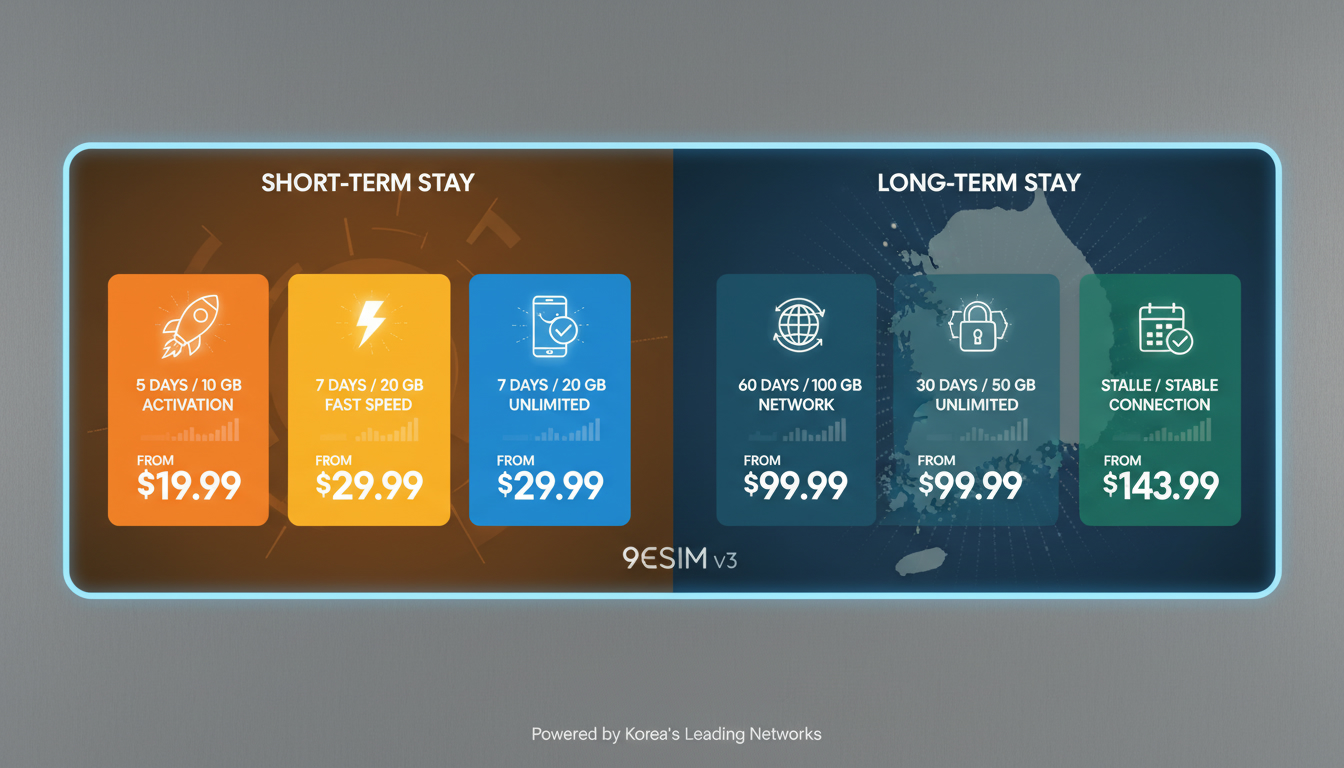
Choosing Between Short-Term and Long-Term eSIM Data Plans in South Korea with 9eSIM V3
If you’re planning to stay in South Korea, picking the right eSIM data plan depends heavily on how long you’ll be there. Short-term visitors need quick activation and affordable daily rates, while long-term residents or frequent travelers prioritize coverage, data volume, and flexibility.
The 9eSIM V3 card, a reusable physical SIM supporting up to 50 profiles, offers a unique approach to managing multiple eSIMs on one device, but how does it fit into short versus long stays? Let’s break down the key differences in pricing, coverage, and activation options to help you decide.
Pricing Differences for Short-Term vs. Long-Term Stays in South Korea
When it comes to cost efficiency, short-term and long-term eSIM plans diverge significantly. Short-term plans typically offer smaller data packages with lower upfront costs but higher per-GB prices.
Long-term plans bundle larger data volumes at better rates per gigabyte but require a longer commitment.
Here’s why this matters: short stays under a week often don’t justify buying a monthly plan because unused data is lost. Conversely, if you stay beyond two weeks, monthly or multi-month plans become more economical.
Typical Short-Term eSIM Offers
Short-term plans usually range from 1 to 15 days with data caps between 3 GB and 5 GB. For example:
- A 1-day plan with 3 GB data can cost around $1.04 (eSIM.dog).
- A 7-day plan offering 3 GB is about $1.99 (Orange Travel).
- A 3-day plan with 5 GB costs approximately $2.30 (MicroEsim).
These plans are ideal for travelers who need immediate internet access without a long-term commitment.
Typical Long-Term eSIM Offers
Longer stays benefit from plans lasting 30 days or more with higher data allowances:
- A 30-day plan with 3 GB data costs around $2.97 (Yatelo).
- Another option offers 3 GB for $3.50 over 30 days (eSIM4Travel).
- JamboSim provides a similar 30-day, 3 GB plan at $3.99.
The longer validity means you can spread your usage over weeks without worrying about running out quickly or paying extra for renewals.
Pricing Table Snapshot of South Korea eSIM Plans
| Provider | Duration | Data | Price (USD) | Notes |
|---|---|---|---|---|
| eSIM.dog | 1 day | 3 GB | $1.04 | Best for very short trips |
| Orange Travel | 7 days | 3 GB | $1.99 | Popular short-term option |
| MicroEsim | 3 days | 5 GB | $2.30 | Higher data for brief stays |
| Yatelo | 30 days | 3 GB | $2.97 | Budget-friendly monthly plan |
| eSIM4Travel | 30 days | 3 GB | $3.50 | Slightly pricier monthly plan |
| JamboSim | 30 days | 3 GB | $3.99 | Reliable monthly option |
These prices reflect real offers verified by MyBestSim, the leading eSIM comparison platform.
Activation Options and Flexibility with the 9eSIM V3 Card
The 9eSIM V3 is a reusable physical SIM card designed by SIMLINK Ltd in the UK that can store up to 50 eSIM profiles simultaneously, making it perfect for travelers juggling multiple destinations or carriers without swapping physical SIMs.
How the 9eSIM V3 Supports Different Stay Durations
For short-term visitors, the ability to instantly switch between profiles without reinstalling an eSIM app or rescanning QR codes is invaluable. The V3 supports STK (SIM Toolkit) commands, enabling seamless profile switching directly from your phone’s SIM menu on both Android and iOS devices—a feature not common in earlier versions.
For long-term users or digital nomads who frequently switch networks across Asia, the capacity to preload many profiles on one card means less hassle managing multiple subscriptions over months or years.
Installation and Compatibility
The 9eSIM V3 installation guide recommends using either an Android phone or a USB-C card reader to load new profiles onto the card because iPhones restrict direct profile management outside of Apple’s ecosystem. This means:
- If you use an iPhone exclusively, you might face limitations activating new profiles without additional hardware.
- Android users benefit from more direct control via apps that communicate with the card.
This compatibility nuance is crucial depending on your device choice and length of stay since frequent profile changes are easier on Android.
Field Observation: Profile Switching Mechanism
When switching profiles on the 9eSIM V3, if you attempt to switch too rapidly without waiting for network registration confirmation, the phone may fail to connect properly. The mechanism requires that after selecting a new profile via STK commands, the device completes network authentication before another switch can occur—otherwise, you risk temporary loss of connectivity until manual reset.
This subtlety affects travelers who rely on instant switching between local carriers during their stay.
Coverage Considerations: SK Telecom, KT, LG U+ and Beyond
South Korea’s three main mobile operators—SK Telecom, KT Corporation, and LG U+—offer extensive coverage nationwide but differ slightly in urban versus rural reach and network speed consistency.
Choosing Coverage Based on Stay Length
- Short-term visitors often prioritize urban coverage in Seoul, Busan, and Jeju Island where all three providers perform well.
- Long-term residents may require broader rural coverage or better indoor penetration in remote areas; SK Telecom generally leads in rural reach while KT excels in urban speed consistency.
Since many eSIM providers resell access on these networks rather than owning infrastructure directly, checking which operator your chosen plan uses is essential for your stay’s location needs.
Field Observation: Network Selection Impact
Because some providers route their service through MVNOs (Mobile Virtual Network Operators), if your stay involves frequent travel outside metropolitan areas late at night or early morning when base stations reduce power consumption, you might notice slower speeds or dropped connections compared to direct operator SIMs.
This effect is more pronounced during longer stays when consistent connectivity matters day-to-day.
Where to Buy and How to Activate Your South Korea eSIM Plan
You can purchase South Korean eSIM plans online before arrival or locally upon landing at airports like Incheon International Airport. However:
- Pre-purchasing online ensures instant activation upon arrival.
- Local purchase may require Korean ID or passport verification depending on provider regulations.
For convenience and verified deals including promo codes like MYBESTSIM for discounts on providers such as Roamic or Yesim, I always start by consulting MyBestSim’s comparison tool tailored for South Korea offers.
If you want to explore how to buy an eSIM specifically for Korea or understand activation steps better, this detailed buy esim korea guide breaks down everything from device compatibility to QR code scanning.
Steps for Activating an eSIM Using the 9eSIM V3 Card
- Load your desired carrier profile onto the physical card using a USB-C reader or compatible Android device.
- Insert the card into your phone’s SIM slot.
- Use the STK menu on your phone to select the active profile.
- Wait for network registration confirmation before switching again.
- Monitor signal strength; if weak indoors or rural areas persistently affect connection quality, consider switching profiles linked to different operators.
This process differs from traditional single-profile eSIMs but offers unmatched flexibility once mastered.
Understanding Software Updates and Features of the 9eSIM V3
The latest update of the 9eSIM V3 software introduces STK support that significantly improves user experience by allowing profile switching without removing or reinstalling SIM profiles manually—a major upgrade over version two.
The software also includes enhanced security features compliant with Kigen’s GSMA-compliant remote provisioning standard SGP.22 ensuring safe profile downloads and management remotely.
If you want a detailed walkthrough of these new features or need a tutorial on installing and managing your profiles effectively using the latest software version, official resources provide comprehensive instructions including a user manual and demo videos accessible through the official site.
For travelers balancing short visits against extended stays in South Korea, understanding these nuances around pricing tiers, network coverage differences among SK Telecom, KT, LG U+, and activation methods via tools like the 9eSIM V3 card is critical for staying connected efficiently without overspending or losing flexibility during your trip.
FAQ
What are the main benefits of 9eSIM V3 for travelers?
The 9eSIM V3 allows storing up to 50 eSIM profiles on one physical SIM card, enabling easy switching between carriers without reinstalling apps. This flexibility is ideal for travelers visiting multiple countries or managing short and long stays efficiently.
How does 9eSIM V3 improve profile switching compared to older versions?
The latest 9eSIM V3 supports SIM Toolkit (STK) commands, allowing users to switch eSIM profiles directly from their phone’s SIM menu without rescanning QR codes. This streamlines the process and reduces downtime during network changes.
Is 9eSIM V3 compatible with both Android and iPhone devices?
While 9eSIM V3 works best with Android phones due to direct profile management via apps, iPhone users face limitations activating new profiles without extra hardware like a USB-C card reader, because iOS restricts direct eSIM profile management.
What should I consider when choosing short-term versus long-term eSIM plans in South Korea?
Short-term plans offer lower upfront costs with smaller data packages suitable for brief visits, while long-term plans provide larger data volumes at better rates per gigabyte, making them more cost-effective for stays over two weeks.
How does network coverage vary among South Korea’s main carriers for eSIM users?
SK Telecom generally offers superior rural coverage, KT excels in urban speed consistency, and LG U+ provides balanced service. Choosing a plan aligned with your stay location ensures better connectivity, especially for long-term residents.

Jiwon Park
Jiwon is a Seoul-based travel and technology writer who has tested eSIMs across South Korea and Asia. At Korea eSIM she compares travel data plans on SK Telecom, KT and LG U+ and helps visitors stay online affordably from Seoul to Jeju.